
Black Friday is November 27 and Cyber Monday November 30, and by then every brand in your customers' inboxes, in the US, UK and Australia alike, is sending daily. The calendar you write in October decides whether you are heard over that noise or simply add to it.
"The brands that win the inbox in November are the ones that were already trusted by it in October."
— Nitesh Kasma, Co-Founder — Brand Strategy & Client Growth
Why does list warming matter before peak?
Mailbox providers judge you on recent engagement, and a list that has been quiet for months and then blasts at volume looks like the pattern spammers use. Warm it first: in October, send useful, lower-pressure mail to your most engaged segments, then widen steadily. Keep unengaged addresses out of the early peak sends, or run them through a re-engagement step and remove those who don't respond.
Authentication and complaint rates also matter. Google's sender guidelines set requirements for bulk senders (5,000 or more messages a day to Gmail addresses), including SPF, DKIM and DMARC, one-click unsubscribe, and keeping the spam rate below 0.30%, with below 0.10% recommended. Check the page for the current wording. Our deliverability guide covers the setup. Do this in October, because a DNS fix on Black Friday morning is too late.
How should send cadence change during inbox congestion?
More sends are not automatically more revenue. Cadence during the peak window should follow audience, not the calendar alone. Practitioner experience, not a published rule:
- Engaged buyers and VIPs can handle a higher peak cadence, and they expect early access.
- Recent openers and clickers get the main campaign sequence.
- Lapsed or unengaged contacts get fewer, higher-value messages, or none.
Watch unsubscribes and complaint rate by segment, not the blended number, as set out in how often should you email. SMS is a shorter leash still: a text lands in a more personal space, so reserve it for the moments that earn it, such as early access, a restock, last-chance and shipping-deadline alerts. For the channel itself see SMS marketing for D2C. One line on compliance: consent rules differ by market (the US TCPA, UK PECR, Canada's CASL, Australia's Spam Act), so confirm each with your regulator or counsel before you build a send list. We cover the detail in a separate November post.
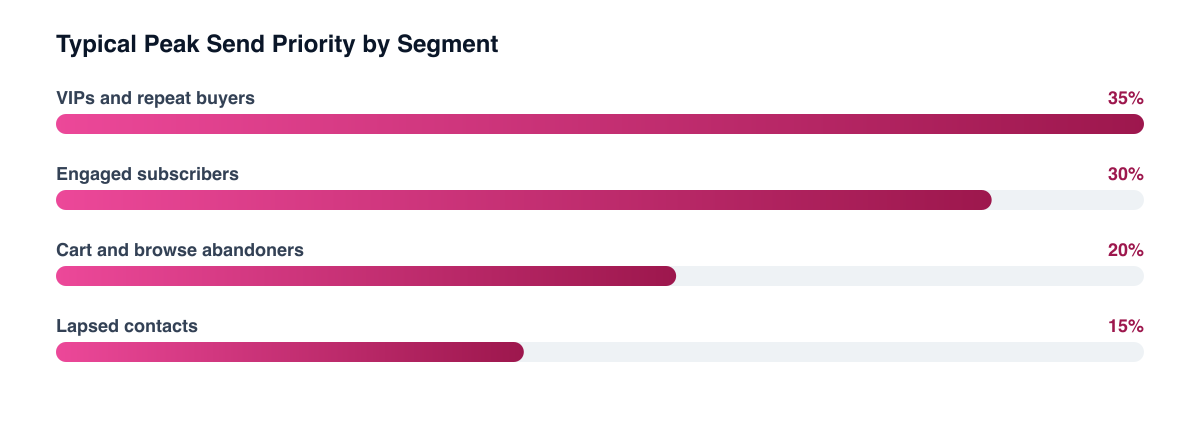
How do you sequence by segment?
Build the calendar as a set of tracks, not one blast. A simple structure:
- Early access (VIPs and repeat buyers): a day or two ahead of the public sale, with a clear reason they were first.
- Main campaign (engaged subscribers): teaser, launch, reminder, last chance.
- Behavioural triggers (abandoners and browsers): your normal flows, checked and refreshed for the sale offer.
- Lapsed track: one strong message, then stop. Our guide on segmentation beyond RFM shows how to define these groups.
Align the offer in the email with the offer on site and in ads, as in the BFCM media timeline. A mismatch generates support tickets and complaints.
Why suppress recent purchasers, and for how long?
Someone who bought an hour ago and then receives "last chance, 30% off" feels cheated, and may return the item or ask for a price adjustment. Suppress recent purchasers from sale promotions and send them a post-purchase track instead: confirmation, shipping updates, and how to use the product. How long to suppress depends on your policy and replenishment cycle, so pick a window and test it. Also suppress known customers with open support tickets or pending returns. See post-purchase email timing for what to send them.
Suppress before you send, not after you apologise Build the "bought in the last N days" and "open return or ticket" exclusions as reusable segments in October and apply them to every peak campaign by default.
What does post-peak recovery look like?
December is not a break. Shift to gift-focused, shipping-deadline and gift-card messages, then in the days after the peak, welcome the new buyers properly. Many of them came for a discount and haven't met you yet. In January, clean the list: remove hard bounces, review the complaint spikes, and give new buyers a sensible second-purchase path. Expect a bump in returns too; our holiday return windows post covers how to handle them without losing the customer.
Related guides
- How Often Should You Email? Finding Your Frequency Ceiling
- Email Deliverability for D2C
- SMS and WhatsApp Marketing for D2C
- Post-Purchase Email Timing
Write the calendar down in October, assign an owner to each track, and decide in advance what you will cut if complaint rates rise. If you want a second pair of eyes on the plan or the flows behind it, our CRM and retention team can help you build it before the inbox gets crowded.
Want a free marketing audit?
We'll review your tracking, ad accounts, and funnel — and show you exactly where the gaps are.
Get Your Free Audit →