
Most post-purchase flows send on day 1, day 7, and day 30 because a template said so. That works until your product takes two weeks to arrive, or runs out in three, and the "how are you finding it?" email lands before the parcel does.
"A post-purchase email is only well timed if the customer is at the moment it assumes they're at. The calendar doesn't know that; the product does."
— Nitesh Kasma, Co-Founder — Brand Strategy & Client Growth
What should drive the timing instead of day counts?
Three moments matter: when the order is confirmed, when the product arrives and is first used, and when it's likely to run out or need replacing. Each calls for a different message, and each has its own delay. Arrival depends on shipping, first use depends on the product, and replenishment depends on consumption, not on when the customer ordered.
Klaviyo's guidance on replenishment flows reflects this: set the delay from the product's supply period and your own purchase history, with its example of a 30-day supply prompting a reminder at around 25 days. That's an example of method, not a number to copy.
What does a consumption-led flow look like?
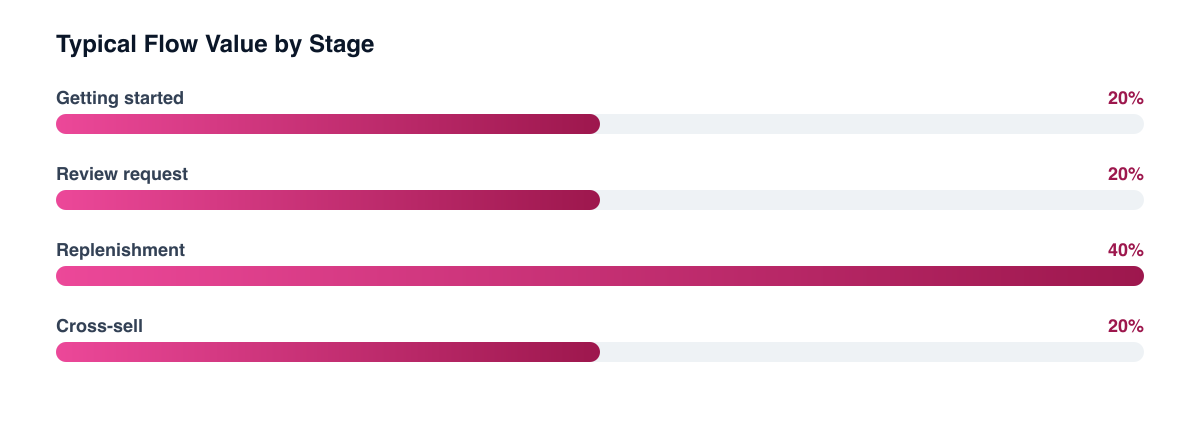
- Order confirmation: immediate, transactional, and clear on delivery expectations.
- Shipping and delivery updates: triggered by carrier events where your platform supports them, not by elapsed time.
- Getting-started message: sent after likely arrival, with usage tips, set-up help, or care instructions.
- Check-in and review request: after the customer has had enough time to judge the product, which differs a lot between a candle and a supplement.
- Replenishment or cross-sell: timed ahead of expected run-out, using supply size and your repeat-purchase data.
How do you find the right gap for your product?
Look at your own data, not a benchmark. Pull the time between first and second orders for customers who reordered, split by product or size. That distribution shows the real replenishment window, and the early edge of it is where a reminder should start. Our second purchase rate guide and cohort analysis cover how to read that.
Where history is thin, use the product itself: the number of servings, the typical usage per day, the recommended replacement interval. State assumptions, then adjust as data arrives.
Where do fixed schedules go wrong?
- Different pack sizes run out at different times, but a single flow treats them the same.
- Slow shipping or delays make early emails arrive before the product.
- Review requests too soon produce thin or negative reviews from customers who haven't used it.
- Replenishment sent late reaches a customer who has already bought elsewhere.
- Stacked flows: a customer who orders twice can receive overlapping sequences. Use flow filters, and see send frequency for keeping the total load reasonable.
Branch by product, not just by purchase Even two or three timing branches, one for each distinct consumption cycle, beat a single universal delay. Start with your best-selling replenishable products.
What about products that aren't consumed?
Durable goods have no run-out date, so use a different trigger: usage milestones, seasonal moments, or the point where an accessory or upgrade becomes relevant. Be honest that timing is looser here; a gentle value-led message beats a forced reminder. For these, post-purchase upsells and community or loyalty content tend to do more than a replenishment nudge.
Whatever you set, treat it as a hypothesis. Compare the new timing with the old over complete purchase cycles, because replenishment results arrive slowly and a two-week read can mislead. Restraint matters too: Klaviyo suggests a small number of reminders within the cycle rather than a long chain, which protects both customer goodwill and deliverability.
Related guides
- The Second Purchase: The Retention Metric That Predicts All the Others
- Klaviyo Email Flow Strategy
- Email Send Frequency for D2C Brands
- Cohort Analysis for D2C Retention
The goal is simple: the right message at the point the customer actually needs it. If you'd like help mapping your products' consumption cycles into a flow, our CRM and retention team can build it with you.
Want a free marketing audit?
We'll review your tracking, ad accounts, and funnel — and show you exactly where the gaps are.
Get Your Free Audit →