
By the time Black Friday week arrives, the accounts that do well have usually already made their important decisions. The ones scrambling are writing briefs, rebuilding audiences, and arguing about budget while auction costs are at their least forgiving.
"Peak season doesn't reward the cleverest November. It rewards the account that already knows, in October, what it will do when costs rise and the offer is live."
— Dhruvit Shah, Co-Founder — Performance Marketing & Growth Strategy
What should be locked by mid-October?
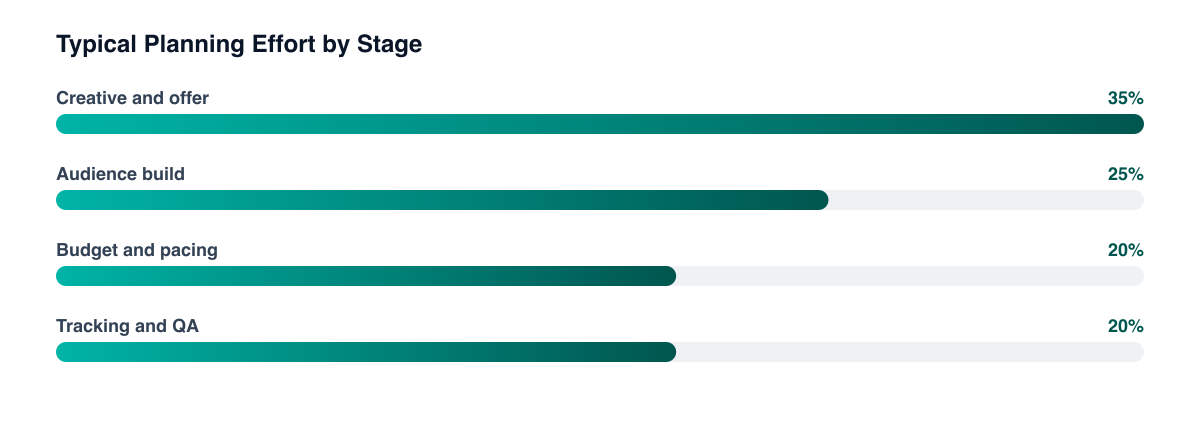
Anything that needs production time or learning time. That means the offer structure (what's discounted, what's bundled, what's excluded for margin), the creative brief, and the tracking setup. Creative takes the longest: shoots, edits, and approvals slip, and you want finished assets in the account early enough to test them before the pressure starts. A fixed offer also lets landing pages, email, and ads tell the same story. If your tracking is shaky, fix it now; a Conversions API problem found on Cyber Monday is expensive to learn about.
When do audiences and learning need to start?
Earlier than feels necessary. Automated bidding needs conversion data, and Meta's help center describes a learning phase in which delivery is less stable until an ad set has gathered enough optimization events (check the current threshold there), so a brand-new campaign launched the week of the sale spends part of the sale learning. Build your prospecting and retargeting pools in October and let them gather data. This is also when to grow warm audiences: email and SMS sign-ups, site visitors, and past buyers are the pools you control when competition for cold audiences gets crowded.
How should you plan budget and pacing around rising costs?
You can't plan to a CPM number you don't have, and nobody can promise one, but the mechanism is reliable: more advertisers bid for the same attention in the weeks around Black Friday, so the cost of reach generally climbs. Your own account history is the best guide. Pull last year's cost trend for your own campaigns and plan against that, not a generic benchmark.
Practical rules:
- Hold a reserve. Don't commit the whole peak budget on day one; keep a share flexible for the days where conversion is strongest.
- Set a break-even per offer, not a blended one. A deep discount changes your margin, and so what you can afford to pay for a customer.
- Pace by day, not by month. See budget pacing for why a monthly rhythm doesn't survive a sale.
- Use platform seasonality tools sparingly. Google's seasonality adjustments are meant for short events, roughly 1 to 7 days, and only when you expect a major conversion-rate change; Google notes Smart Bidding already handles routine seasonality and that adjustments may work less well beyond 14 days.
What can safely wait until November?
Bids, daily budgets, and creative rotation. These are the levers you adjust against live results. What shouldn't wait: new creative concepts, new tracking, and new campaign structures. Changing those mid-peak resets learning at the worst time. If you scale spend, do it in steps, as covered in scaling budgets without killing performance.
Decide what you will do before the costs rise, not after Write down in October the trigger for pulling back, the trigger for adding spend, and who can approve each. Decisions made in the middle of a sale tend to follow panic, not data.
What does a simple October-to-December sequence look like?
- Early to mid October: finalise offer, margins, and creative briefs; audit tracking.
- Late October: creative live and testing; audiences building; email and SMS lists being grown.
- Early November: prospecting at a measured pace, with winning creative identified; retargeting pools ready.
- BFCM week: adjust budgets and bids daily, using your pre-set triggers; avoid structural changes.
- Early December: shift to gift-focused messaging and shipping deadlines; review what held up.
Peak weeks also bring a lot of promotion-driven buyers who may not return, so keep an eye on retention and lifetime value, not just first-order ROAS. Credit for a sale depends on how you measure it, and sale-week numbers are the least tidy of the year.
Related guides
- Budget Pacing: Why the Monthly Budget Is Costing You Performance
- Scaling Ad Budgets Without Killing Performance
- Creative Fatigue: How to Spot It, Diagnose It, and Fix It
- Meta Conversions API: The Complete Setup Guide
The best peak plan is a short one that people actually follow: decisions made early, triggers written down, and room left to adapt. If you want help building one for your account, our performance marketing team can set the plan with you before the auctions get busy.
Want a free marketing audit?
We'll review your tracking, ad accounts, and funnel — and show you exactly where the gaps are.
Get Your Free Audit →