
For most D2C brands, Klaviyo is either a massive revenue driver or a mostly-ignored tool with a default welcome email and a half-built abandoned cart flow. The difference between those two outcomes isn't the platform — it's the architecture. Here's how to build the retention engine that compounds over time. The flow benchmarks throughout come from Klaviyo accounts we've audited and rebuilt, not from Klaviyo's published averages.
How does a welcome series convert subscribers into buyers?
The welcome series is your highest-leverage flow. Open rates are 3–4× higher than campaign averages because subscribers are engaging with your brand for the first time. Most brands waste this with a single "here's your discount code" email. Don't.
A high-performing welcome series structure:
Email 1 (immediate) — The welcome + brand story Deliver the offer if promised. Then tell your brand story — the why behind the brand. This is what creates emotional connection, not discounts.
Email 2 (Day 2) — Social proof + top products Lead with reviews and bestsellers. Let customers do the selling for you. Add urgency if the welcome offer has an expiry.
Email 3 (Day 4) — Education and differentiation What makes your product different? Ingredients, sourcing, manufacturing, the problem you solve. Build the case for why you're worth it.
Email 4 (Day 7) — Final push + expiring offer Remind them the discount expires. Be direct. A/B test subject lines: 'Last chance' vs. 'Your 15% off expires tonight'.
Abandoned cart: why is timing everything?
In the accounts we've audited, the gap between an average abandoned cart flow and a strong one is almost entirely timing and messaging precision.
1 hour after abandonment Strike while intent is hottest. Keep it simple: remind them what's in their cart. No discount yet — you don't need to give margin away at this stage.
24 hours after abandonment Add social proof specific to the abandoned product. Reviews, star ratings, UGC. Address common objections (shipping, returns, ingredients).
72 hours after abandonment This is the incentive email. Offer a time-limited discount (10% or free shipping). Make the expiry real — use a countdown timer.
Critical: suppress abandoned cart flows for customers who purchase during the sequence. Nothing destroys trust faster than getting a "you left something behind" email for an order you already placed.
How does a post-purchase sequence build loyalty before they leave?
The post-purchase window is when customer sentiment is highest. Most brands use it for transactional confirmation emails and nothing else. This is a massive missed opportunity.
Order confirmation (immediate) Standard transactional email but branded. Set expectations for shipping timeline. Begin building anticipation.
Shipping confirmation (on shipment) Track link + excitement-building content. Show them what to do when the product arrives. Plant the seed for a review request.
Product education (Day 3 after delivery) How to use the product for best results. This reduces returns and complaints, and increases satisfaction and repeat purchase intent.
Review request (Day 7 after delivery) One clear ask: leave a review. Link directly to the review form. Offer a small incentive if legal in your category.
Cross-sell / replenishment (Day 14–21) Recommend complementary products based on what they bought. For consumables, trigger a replenishment reminder before they run out.
How does a win-back flow rescue churning customers?
Win-back flows target customers who haven't purchased in a defined window. The trigger depends on your product's natural repurchase cycle — for a 30-day consumable, start win-back at 45 days. For a 90-day consumable, start at 120.
Win-back Email 1 Soft re-engagement: 'We miss you.' Show new products or bestsellers they haven't tried. No offer yet.
Win-back Email 2 (+7 days) Introduce an offer: 15–20% off or a free gift with purchase. Create urgency with a 5-day expiry.
Win-back Email 3 (+14 days) Last chance. Be honest: 'This is our last email before we remove you from our list.' This authenticity actually recovers customers.
Sunset (if no engagement) Move non-engagers to a suppression list. Sending to disengaged contacts destroys deliverability. A clean list outperforms a big list every time.
How do you layer SMS and email channels?
SMS gets read faster and more reliably than email. But SMS is interruptive — overuse it and you get unsubscribes fast. The rule of thumb: SMS for time-sensitive moments, email for nurturing.
- Use SMS for abandoned cart reminders (1-hour touch), flash sales, and back-in-stock alerts
- Use email for welcome series, post-purchase education, and win-back sequences
- Suppress email for 2 hours after an SMS touch to avoid double-hammering
- Never send SMS after 9pm or before 9am in the subscriber's timezone
- Always include a clear, one-tap opt-out and honor it instantly
Segmentation and flow analytics
Flows without segmentation are spray-and-pray at a slower cadence. The most impactful segments to build into your email flows:
VIP customers (top 10% by LTV) Skip discount emails — they'd buy anyway. Send exclusive early access instead.
First-time buyers Prioritize education and social proof. They haven't built trust yet.
Multi-buyers Lead with loyalty program upsell and cross-category recommendations.
Discount buyers These are price-sensitive. Use targeted offers but test weaning them off with value-led messaging.
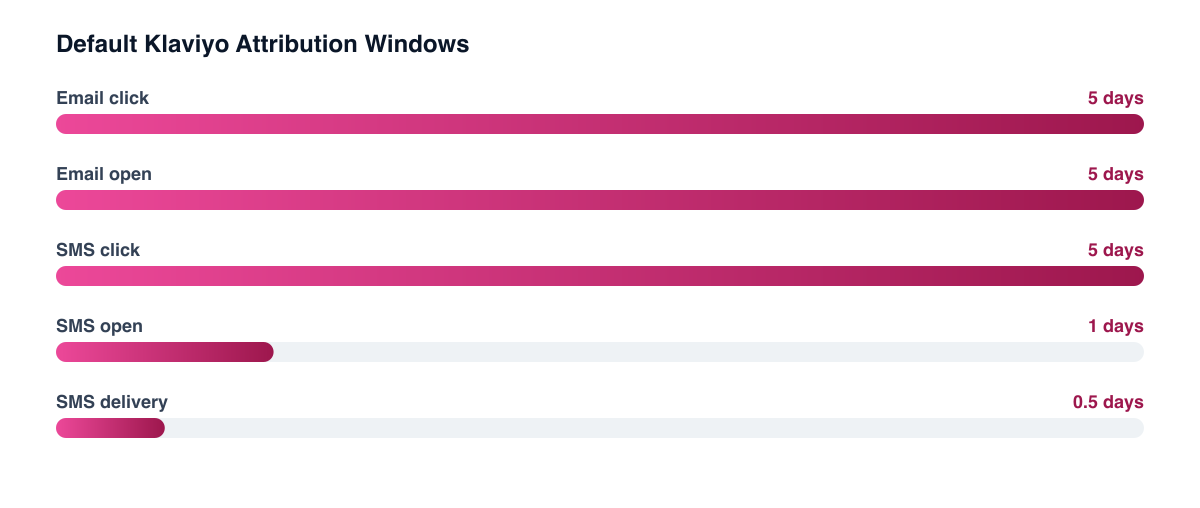
For revenue attribution, check your window before trusting the number. Klaviyo's default is a last-touch model with a 5-day lookback for email opens and clicks, and shorter windows for SMS. Anyone who has widened it, or who compares Klaviyo's figure to a last-click source, will see email revenue that looks inflated. Compare email-attributed revenue to your Shopify source data monthly to catch attribution drift.
The bottom line
A fully built Klaviyo retention engine — welcome, abandoned cart, post-purchase, and win-back — should account for a substantial share of total revenue for a healthy D2C brand. In the accounts we've audited, when email is a small fraction of revenue, the flows usually aren't working hard enough.
Related guides
- D2C Retention Marketing: Email, SMS, and Owned Channels That Drive Repeat Revenue
- Email Should Be One of Your Biggest Revenue Channels
- SMS and WhatsApp Marketing for D2C
- D2C Retention: How to Turn One-Time Buyers into Loyal Customers
The flows you build today compound for years.
"The flows you build today compound for years."
— Nitesh Kasma, Co-Founder — Brand Strategy & Client Growth
Every subscriber who enters your welcome series, every abandoned cart recovered, every churned customer won back — that's LTV you keep without paying for another impression.
PART OF OUR SERVICE
CRM & Retention
PROOF FROM A CLIENT
+45% repeat purchase rate
from 22% to 32% of customers purchasing again within 90 days · Beauty & Personal Care
How a Beauty D2C Brand Lifted Repeat Purchase Rate by 45% with a Loyalty Program Rebuild→Want a free marketing audit?
We'll review your tracking, ad accounts, and funnel — and show you exactly where the gaps are.
Get Your Free Audit →