
Organic social stopped being a brand awareness channel somewhere around 2022.
"Organic social stopped being a brand awareness channel somewhere around 2022."
— Nitesh Kasma, Co-Founder — Brand Strategy & Client Growth
In 2026, it's a revenue channel — one that compounds, reduces paid CAC, and builds defensibility that no ad account can replicate. D2C brands that still treat Instagram and TikTok as "content calendars" are leaving measurable money on the table.
This guide covers everything: platform selection, content strategy, Reels and TikTok mechanics, community building, social commerce, creator partnerships, and how to actually attribute revenue to organic efforts. Use it as a reference, not a one-time read.
Why does organic social matter more in 2026 than it did in 2022?
Across the accounts we manage, paid media CPMs on Meta and Google have risen roughly 30–50% over the past three years. Brands that built strong organic audiences during that period absorbed the increase better — their blended CAC stayed manageable because organic was filling a portion of the top of funnel for free.
But it's not just economics. Consumer behavior has shifted. Clutch's 2025 From Scroll to Sale report, summarised by eMarketer, found that 78% of US consumers say their purchases are influenced by brands on social media — while only 15% actually buy inside a social platform. That gap is the whole argument for organic social: the influence happens on your profile, the transaction happens on your site. Shoppers aren't looking for ads there. They're looking for proof: real people using the product, authentic content, a brand with a point of view. A dormant Instagram feed or a TikTok account with three videos is a conversion leak.
The same report found that after discovering a product on social, 36% of consumers go directly to the company's website and 31% go to Amazon or another marketplace — which is why your social presence and your marketplace listings need to tell the same story.
The brands winning now have figured out that organic social drives revenue when it's built around purchase intent signals, not vanity metrics. Saves, DMs, profile visits, and link taps matter more than likes. Building toward those signals — rather than raw reach — is the strategic reset most brands need.
What platform strategy works: Instagram vs. TikTok vs. LinkedIn?
The biggest mistake D2C brands make is treating all platforms identically. Each has different algorithmic mechanics, audience behavior, and commercial infrastructure. Choose based on where your buyer actually is, then commit.
Instagram remains the dominant platform for discovery-to-purchase in fashion, beauty, home, and lifestyle. Its advantage is the full funnel: Reels for reach, Stories for relationship, and Instagram Shop for native checkout. The demographic skews 25–44, with strong purchasing power. If you're a brand where visual aesthetic is a core product value driver, Instagram is non-negotiable.
TikTok is the reach engine. Its algorithm is content-first, not follower-first — a new account with one strong video can hit a million views without a single follower. That makes it the best organic growth lever for brands that can produce genuine, native-feeling content. The demographic has broadened: 35–54 year olds are now the fastest-growing TikTok segment. If your product solves a visible problem or tells a good story, TikTok organic is your highest-leverage channel.
LinkedIn matters for D2C brands with a B2B angle — corporate gifting, B2B2C plays, or founder-led brands building investor and press credibility. For pure consumer plays, it's lower priority. Focus there only if your audience overlaps with professional buyers or you have a strong founder story to tell.
Platform allocation rule of thumb: Brands in year 1–2 should commit to one platform deeply rather than mediocrity on three. In year 3+, expand with platform-native content strategies — not reposts of the same video everywhere.
What Instagram Reels strategy and cadence work best?
Reels is Instagram's primary distribution mechanism for reaching non-followers. Carousel posts and static images still hold value for engaged followers, but Reels is how you grow. The algorithm rewards watch time, shares, and saves — not likes.
The cadence question: 3–5 Reels per week is the current sweet spot for growth-stage brands. Under that, the algorithm doesn't have enough signal to learn what your content does well. Over 7–8 per week, quality degrades and you cannibalize your own performance.
Reels benchmarks:
- Watch-through rate above 50% = strong performance
- Share-to-view ratio above 2% = viral potential
- Save rate above 3% = high purchase intent signal
The content structure that performs: hook in the first 2 seconds (text overlay or motion), value delivery in seconds 3–15, and a soft call to action or product reveal in the final 3 seconds. Reels that sell too hard in the first 5 seconds see 40–60% drop-off rates. Show the problem or the lifestyle first — product second.
Detailed tactical breakdown, including which Reels formats drive actual revenue for D2C brands versus which ones just get views: Instagram Reels for D2C Brands: How to Drive Revenue, Not Just Views.
What are the TikTok organic growth mechanics?
TikTok's algorithm is genuinely different from Instagram's and most brands get it wrong. The "For You Page" is not a follower feed. It distributes content based on engagement signals from small test audiences — if a batch of 200–500 users engages well, TikTok pushes to a larger pool, then larger again. This means brand new accounts can go viral. It also means evergreen content resurfaces months later.
The mechanics that matter:
Hook rate — the percentage of viewers who watch past the 3-second mark. Under 30% and TikTok stops distributing. Over 50% and you're in the running for broad push. Text hooks on screen work better than voiceover hooks alone because a meaningful share of TikTok is watched on mute.
Comment velocity — TikTok counts comments as a strong engagement signal, especially comments that are replies to other comments. Brands that seed the comment section (genuine community interaction, replying to early commenters) extend distribution windows.
Video completion — for videos under 30 seconds, completion rate is the dominant signal. Keep early-stage TikToks under 30 seconds until you've built an audience that signals it wants longer content.
Posting frequency — 1–2 per day is optimal for growth phase. This sounds aggressive but TikTok's content half-life is 24–48 hours for most posts. High frequency with adequate quality beats low frequency with high production value on TikTok specifically.
The mistake most brands make: producing brand-polished content that works on Instagram and posting it on TikTok. TikTok rewards authentic, native-feeling content. Overproduced videos get punished with lower completion rates because TikTok audiences have trained themselves to skip ad-feel content instantly.
The full framework for building a TikTok audience that actually converts — not just watches: TikTok Organic Strategy for D2C Brands: Growing an Audience That Buys.
Which content types drive purchase intent vs. vanity metrics?
Not all content types are equal from a revenue perspective. Understanding the hierarchy prevents you from optimizing for the wrong signal.
High purchase intent content:
- Product demonstrations solving a real problem — not a lifestyle shot, but a visible before/after or use-case walkthrough
- Unboxing and first-use content (especially UGC) — social proof at the moment of consideration
- Comparison content (your product vs. the category alternative)
- Customer testimonial clips — especially specific and outcome-focused ("I was returning 3 pairs a month until I tried these")
Brand equity content (lower direct purchase intent but important):
- Founder and team content — builds trust and affinity, especially in a crowded category
- Behind-the-scenes production or sourcing — works for brands with a supply chain story
- Community spotlights — customers as heroes, not the brand as hero
Vanity content (high likes, low revenue):
- Aesthetic static posts with minimal context
- Trend participation that has no connection to the product
- Inspirational quotes and lifestyle shots with no product anchor
A balanced content mix is roughly 60% high-intent / 40% brand-equity. Pure aesthetic feeds look good and convert poorly.
How do you build a brand community that reduces CAC?
Community is the compounding asset that most D2C brands underinvest in until they're desperate for cheaper acquisition. The math is straightforward: in the brands we've worked with that built genuine communities, word-of-mouth referrals account for 15–30% of new customer acquisition. That's revenue-driving traffic with a CAC near zero. Clutch's 2025 consumer research points the same direction — 64% of customers return to a brand after a successful social shopping experience.
Building community on social isn't the same as growing followers. It requires a structural shift: creating spaces and rituals where members interact with each other, not just consume the brand's content. That reciprocal interaction — member-to-member — is what builds identity and defensibility.
The platform options in 2026 vary by brand size and category. Instagram Broadcast Channels work for brands with 10K+ engaged followers. TikTok Series and Lives work for content-driven brands. Discord and Slack communities work for brands with highly engaged, high-LTV buyers who want deeper access. The trap is launching a community channel before you have the content cadence and moderation resources to sustain it — a dead Slack is worse than no Slack.
Tactics that actually build community versus just audience: shared language and inside references, co-creation (product feedback, naming, voting), exclusive access for community members, and consistent acknowledgment of individual members publicly. The full playbook: How to Build a Brand Community on Social Media That Actually Converts.
How do Instagram Shop and TikTok Shop drive social commerce?
Native checkout is the most significant structural change to D2C social in the last three years. Customers can now discover, evaluate, and purchase without leaving the app. The friction reduction is substantial — Instagram Shop conversion rates on in-app purchases run 2–3x higher than link-in-bio click-through traffic for equivalent products.
Instagram Shop works best for brands with visually clear products under $100. Setup requires a product catalog, Meta Commerce Manager integration, and product tagging on content. The distribution advantage: tagged products appear in the Shop tab and can be featured in Reels shopping overlays. Brands running shoppable Reels see 20–35% higher average order initiation than non-shoppable content.
TikTok Shop has matured significantly since its US rollout. In 2026, it's a legitimate revenue channel for the right product categories — beauty, apparel, home goods, and food supplements perform best. The TikTok Shop affiliate program is the standout feature: creators can link your products in their organic content and earn commission on sales, giving you a performance-based creator distribution network.
The operational consideration most brands underestimate: social commerce requires inventory and fulfillment infrastructure that integrates with platform orders. Returns, customer service, and refund handling all run through the platforms, with different SLAs than your owned store. Don't launch TikTok Shop or Instagram Shop without a fulfillment process that can handle same-day order confirmation.
Deep tactical guide: Social Commerce in 2026: Selling Directly on Instagram Shop and TikTok Shop.
What do influencer and creator partnerships look like in 2026?
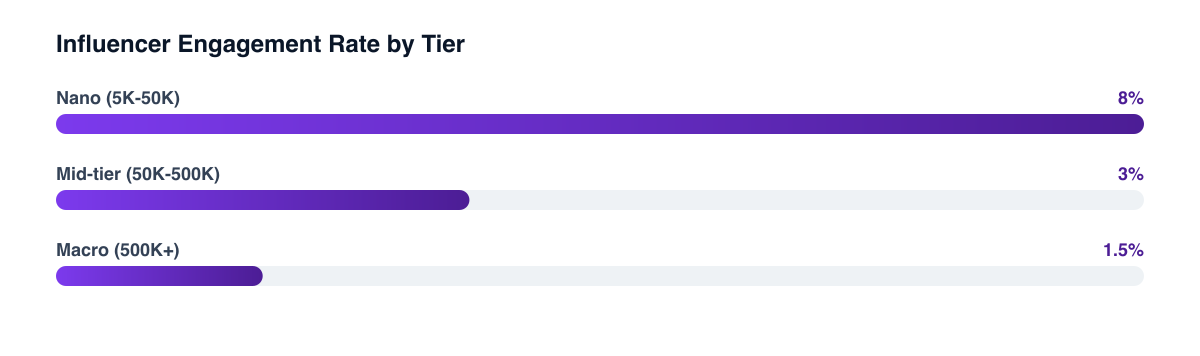
The influencer market has matured and split. Macro-influencers (500K+ followers) remain expensive and performance is inconsistent. The ROI sweet spot in 2026 is mid-tier creators (50K–500K) and nano creators (5K–50K) who have genuine niche authority and high engagement-to-follower ratios.
Influencer benchmarks by tier (ranges we see across our own creator programs — verify against your category before budgeting):
- Nano (5K–50K): 4–8% engagement rate, $100–$500 per post
- Mid-tier (50K–500K): 1.5–3% engagement rate, $500–$5,000 per post
- Macro (500K+): 0.5–1.5% engagement rate, $5,000–$50,000+ per post
The model that works in 2026 is performance-based partnerships, not flat fees for content. TikTok Shop affiliates and Instagram collab posts with tracked links allow you to pay on results rather than reach. For brands with products that photograph or film well, this is significantly more capital-efficient than traditional influencer deals.
Whichever model you use, the disclosure obligation is yours as much as the creator's. The FTC's Endorsement Guides and its Disclosures 101 for Social Media Influencers require that any material connection between a brand and a creator be disclosed clearly and conspicuously — in the post itself, not buried in a bio or behind a "more" link. Build the disclosure requirement into your creator briefs and contracts rather than hoping each creator gets it right.
The biggest operational mistake: one-off posts. Single influencer posts generate a spike and then nothing. Brands that build ongoing ambassador relationships — monthly posts, product seeding, community involvement — see 3–5x the lifetime revenue attribution compared to one-off campaigns. The long-term relationship also improves content quality because the creator genuinely knows the product.
Honest assessment of when influencer ROI is real and when it's expensive brand theater: Influencer Marketing in 2026: Real ROI or Expensive Vanity?.
How do you measure organic social's actual revenue contribution?
Attribution is where organic social strategy either has a seat at the table or gets defunded. If you can't connect organic efforts to revenue, the budget goes to paid — even when organic is driving meaningful pipeline.
The measurement problem: most analytics platforms default to last-click attribution, which almost always credits paid search or direct traffic and strips organic social of credit. Organic social typically plays an assist role — building awareness and consideration before a customer converts through a paid retargeting ad or a branded search.
What to actually measure:
- Assisted conversions — set up multi-touch attribution in your analytics stack (GA4's data-driven attribution model or a dedicated tool like Northbeam or Triple Whale) to see organic social's role in purchase paths, not just last-click conversions
- UTM-tracked revenue — tag every link in bio, every Story swipe-up, and every shoppable post with UTM parameters. This captures the portion of revenue where organic social is the converting touch
- Profile visit to website traffic ratio — tracks how effectively your social profile converts visitors to site traffic; benchmark against your own historical baseline
- New follower DM and reply rates — qualitative signal of content resonance; high reply rates correlate with higher purchase intent in the follower base
The CAC contribution calculation: Take the incremental revenue from UTM-tracked organic social touchpoints and assisted conversions, divide by the total cost of producing that content (team time, production, tools). Brands doing this consistently find organic social CAC running 40–70% below their blended paid CAC — the problem is most brands never do the math.
For D2C brands running paid alongside organic, also model the paid CAC difference between customers who engaged with organic content before converting versus those who didn't. The organic-first customer almost always shows lower paid CPAs because they arrive with prior brand exposure. That differential is real value that belongs on organic social's P&L.
If you're running TikTok paid alongside organic, those two channels interact strongly — TikTok organic content that performs well can be whitelisted and run as paid ads. The full paid TikTok playbook: TikTok Ads for D2C: What's Actually Working in 2026.
What does a 90-day organic social operating system look like?
The gap between brands that extract revenue from organic social and those that treat it as a checkbox is execution consistency, not strategy quality. Most D2C teams know what to do. Few build the operating system to do it reliably.
A minimal viable system for a two-person team:
Week 1–2: Audit current content against the high-intent / vanity framework above. Kill content types that aren't driving saves, DMs, or link taps. Establish baseline metrics for the four measurement categories listed in the section above.
Week 3–4: Set content cadence targets by platform. Build a 2-week rolling content calendar with defined content types (don't just plan "a Reel" — specify format, hook, product angle). Assign one person ownership of community response time (target: under 2 hours for comments and DMs during business hours).
Month 2: Run your first creator partnership under a performance structure. Seed product to 5–10 micro creators with a TikTok Shop or Instagram collab integration. Track revenue attribution, not just impressions.
Month 3: Review assisted conversion data. Present organic social's CAC contribution alongside paid channels. Make the case with numbers — or identify where the strategy needs adjustment before scaling.
The brands that win on organic social aren't necessarily producing better content than their competitors. They're the ones with a system, measurement discipline, and the patience to let compounding work.
The bottom line
Organic social for D2C is a revenue channel in 2026 — measurable, compound, and increasingly necessary as paid CPMs stay elevated. The brands that will have lower CAC and higher defensibility in two years are the ones building organic infrastructure today: high-intent content, real community, native commerce integration, and attribution that puts organic on equal footing with paid.
Related cluster guides
- Organic Social for D2C Brands: What Actually Drives Revenue vs. What Just Gets Likes
- Instagram Reels for D2C Brands: How to Drive Revenue, Not Just Views
- TikTok Organic Strategy for D2C Brands: Growing an Audience That Buys
- How to Build a Brand Community on Social Media That Actually Converts
- Social Commerce in 2026: Selling Directly on Instagram Shop and TikTok Shop
- Influencer Marketing in 2026: Real ROI or Expensive Vanity?
- TikTok Ads for D2C: What's Actually Working in 2026
Work with us on this
We run full-funnel social media strategy and execution for D2C and B2B brands globally. Start with a free audit →
PART OF OUR SERVICE
Social Media
Want a free marketing audit?
We'll review your tracking, ad accounts, and funnel — and show you exactly where the gaps are.
Get Your Free Audit →