
The best-performing unboxing content isn't scripted — it's a customer reacting to a box that was designed to produce that reaction. Packaging and creative are usually run by two different teams with two different budgets, and that split is exactly why most brands miss it.
"The best-performing unboxing content isn't scripted — it's a customer reacting to a box that was designed to produce that reaction."
— Palash Shukla, Creative Designer
Treat packaging as a creative brief input, not an afterthought stamped with a logo, and the unboxing moment starts generating ad-ready footage without you having to shoot it.
Why does unboxing content outperform studio creative?
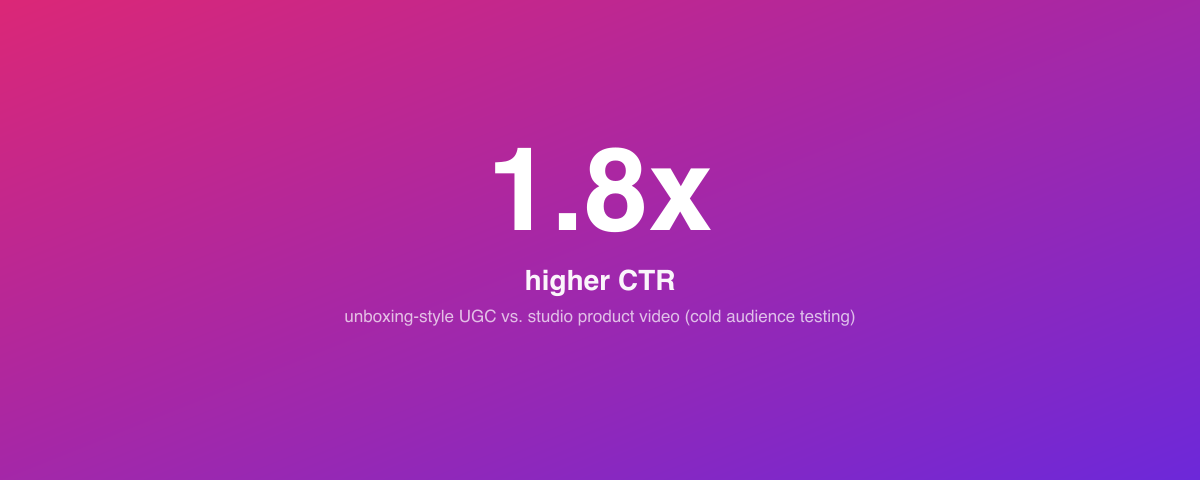
A studio-shot product video tells a customer what a brand claims about itself. An unboxing video, even a mediocre one, shows a real person's unscripted reaction — and that reaction reads as proof, not pitch. It's the same reason UGC consistently outperforms polished studio creative in cold-audience testing: the format itself signals authenticity before the viewer processes a single word of copy.
What actually makes packaging "creative-ready"?
- A reveal moment, not just a container. Tissue paper with a pull-tab, a two-stage box, a magnetic close that makes a satisfying sound — anything that gives the camera something to react to in the first three seconds.
- A surprise element inside the price point. A handwritten note, a small unexpected extra, or a design detail that isn't visible in the product photo — customers film the thing they didn't expect, not the thing they already saw online.
- Legible branding at the exact distance a phone camera sits during unboxing — most packaging is designed to look good on a shelf, not at arm's length under a phone's camera, and that's a different design brief.
- A reason to keep filming after the box opens — a QR code to a styling guide, a card prompting a specific action, anything that extends the clip past the reveal itself.
The test that tells you if it's working Search your own brand hashtag and product name on TikTok and Instagram unprompted. If customer-filmed unboxing content exists without you having sent product for it, the packaging is already doing creative work on its own.
Who should actually own this decision?
Packaging usually sits with ops or product, and creative briefs usually start after a product already exists — which means the reveal moment gets bolted on late, if at all. The brands that do this well pull creative into the packaging decision before tooling is finalized, the same way influencer creative briefs get built before a shoot instead of after. A cardboard mockup review with the creative team costs nothing and catches most of the missed opportunity before it's locked into a production run.
Where this breaks down A packaging redesign driven purely by "what films well" without checking cost-per-unit and fulfillment speed will get reversed the first time it hits margin or a 3PL's packing line. Creative input needs to happen alongside ops sign-off, not instead of it.
Does this replace paid UGC production?
No — it feeds it. Real customer unboxing clips become a sourcing pool for paid ad creative once you have permission to use them, and they tend to test better than commissioned UGC because the reaction is unprompted. The packaging doesn't replace a creative production pipeline; it becomes one of the cheapest inputs into it.
Related guides
- UGC vs. Studio Creative: When Each One Actually Wins
- Creative Briefing for Influencers: What Actually Belongs in the Brief
- Video Ad Production for D2C: What's Worth Paying For
- Brand Identity for D2C: Building a Look That Scales Past the Founder's Taste
Packaging spend already exists in every D2C budget. The only question is whether it's designed to just hold the product, or designed to also produce the ad. Treating the box as an owned creative surface costs nothing extra in media spend and produces assets the ad account would otherwise have to buy.
PART OF OUR SERVICE
Creative & Branding
Want a free marketing audit?
We'll review your tracking, ad accounts, and funnel — and show you exactly where the gaps are.
Get Your Free Audit →