
D2C Retention Marketing: Email, SMS, and Owned Channels That Drive Repeat Revenue
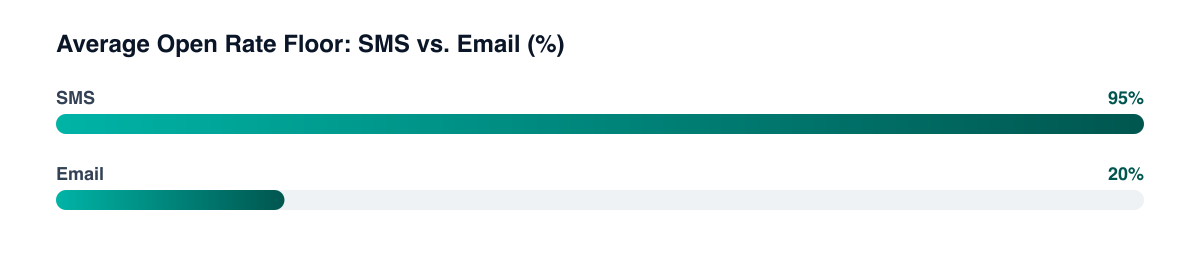
The brands winning in D2C right now are not outspending their competitors on paid acquisition — they are out-retaining them. While everyone else chases Meta CPMs and Google CPCs that have climbed 40%+ since 2022, the compounders have built owned channel ecosystems that convert customers they already paid to acquire into LTV engines that fund the next round of acquisition. Email alone accounts for 30-40% of revenue at well-run D2C brands. SMS delivers open rates north of 95%. Subscription locks in predictable revenue months in advance. The math is not complicated: you paid to acquire the customer once, so every repeat purchase is pure margin expansion. Every benchmark in this guide comes out of retention programs we've audited ourselves, which is why the figures are stated as ranges rather than the round numbers quoted elsewhere.
This pillar covers everything — the unit economics argument, the five email flows you cannot skip, the Klaviyo configurations that matter, SMS and WhatsApp done right, subscription models that reduce churn instead of creating it, and affiliate structures that build a performance channel without a full agency. More importantly, it shows how these channels compound when you run them together.
Why Is Retention the Highest-ROI Investment in D2C?
A new customer acquired through paid social in a competitive vertical costs $35-80 in 2026. If that customer buys once and never returns, your blended CAC is punishing. But if they buy three times, your effective CAC drops by 60-70% because the gross margin on the second and third purchases is nearly pure profit — no incremental acquisition cost, lower fulfillment cost per order at volume, and higher AOV as familiarity with the catalog grows.
The unit economics case for retention is well established. The most-quoted version of it — a 5% increase in retention rate increases profit by 25–95% — comes via Harvard Business Review from Frederick Reichheld's work at Bain, originating in Zero Defections: Quality Comes to Services (Reichheld and Sasser, HBR, 1990). Treat the range as directional rather than a forecast for your business: those findings came from service industries, and the top of the range reflected a single bank's branch network, not D2C e-commerce. What does transfer cleanly is the mechanism — every additional purchase from an existing customer flows almost entirely to the bottom line once fixed costs are covered, which is why retention compounds in a way that acquisition doesn't.
The brands that have cracked this build what is effectively a D2C retention strategy that treats owned channels not as email blasts and discount SMS but as a structured post-purchase journey. They map the customer lifecycle, identify the moments of highest intent (immediately post-purchase, 30 days in, at the point of replenishment), and engineer touchpoints that convert those moments into the next transaction.
The LTV math becomes transformational fast. A customer with a 2x purchase frequency and $75 AOV generates $150 in annual revenue. Move that to 3x frequency — achievable with good retention infrastructure — and you are at $225. Against a $50 CAC, the difference is the business model.
The compounding effect Retention investment compounds in ways paid acquisition cannot. A better email flow keeps working for every customer who enters the funnel forever. A better welcome series runs 24/7 without a media budget. A subscription program that reduces churn by 5% produces more revenue every single month without additional spend. Paid acquisition requires constant reinvestment; retention infrastructure produces returns indefinitely.
Email: Why Is It the Highest-Margin Channel?
Email is the most underutilized high-margin channel in D2C. The brands generating email revenue at 30-40% of total are not doing anything exotic — they have five core flows built, segmented properly, and sending with enough frequency to stay top of mind without burning the list.
The five flows every D2C brand needs are non-negotiable infrastructure:
Welcome Series — Your highest-converting sequence. New subscribers convert at 3-5x the rate of your general list for the first 7 days. A three-to-five email welcome series that leads with brand story, addresses the primary objection for first purchase, and closes with a time-sensitive offer will outperform any single campaign email you ever send.
Abandoned Cart — Industry average recovery rate is 5-10% with a basic three-email sequence. The difference between a mediocre abandoned cart flow and a well-built one is usually in the second email: most brands resend the cart. The better play is to surface the objection — is it price, shipping cost, uncertainty about fit or ingredients? — and address it directly.
Post-Purchase / Onboarding — This is where most brands leave retention revenue on the table. The post-purchase window (0-14 days) is when buyer's remorse either takes hold or brand affinity crystallizes. A sequence that delivers value (how to use the product, what to expect, community touchpoints) rather than immediately upselling has measurably better LTV outcomes.
Replenishment / Win-Back — If your product has a natural replenishment cycle — supplements, skincare, consumables — and you are not triggering a replenishment email at day 25-28 of a 30-day supply, you are funding your competitors' acquisition costs. Win-back for lapsed customers (60-90 days no purchase) with a compelling offer recovers 10-15% of churned customers at near-zero cost.
Browse Abandonment — Lower volume than cart abandonment but high intent. A two-email sequence triggered at 1 hour and 24 hours after browsing a specific collection or product converts at 2-4% against a list that is already warm.
The segmentation imperative Sending every email to every subscriber is the fastest path to list decay. Segment by purchase history, engagement recency, and product affinity at minimum. A customer who bought skincare should never receive an email leading with supplements. Proper segmentation is not a nice-to-have — it is the difference between a 25% open rate and a 12% open rate, which is the difference between a channel that generates revenue and one that burns deliverability.
Klaviyo: Why Is It the Platform Standard, and How Do You Actually Use It?
Klaviyo is the default platform for serious D2C email and SMS operations, and for good reason — the integration depth with Shopify, the predictive analytics, and the segmentation engine are genuinely best-in-class. But most brands using Klaviyo are using 20% of its capability.
The Klaviyo email flow strategy that actually moves revenue is built around three things the platform does uniquely well: predictive LTV scoring, conditional splits based on purchase behavior, and Shopify catalog sync for dynamic product recommendations.
Predictive LTV scoring lets you identify which new customers are likely to become high-LTV customers within 90 days of their first purchase, based on behavioral signals. The practical application is simple: high-predicted-LTV customers go into a VIP track with higher-touch sequences and early access to new products. Low-predicted-LTV customers get a more aggressive offer cadence to drive a second purchase before they lapse.
Conditional splits in flows are where Klaviyo earns its cost. A post-purchase flow that splits based on whether a customer has made a previous purchase — and delivers a cross-sell vs. a retention/education sequence accordingly — will consistently outperform a one-size-fits-all approach by 15-25% on revenue per recipient.
The platform fee conversation is worth having directly: Klaviyo is not cheap at scale. At 100,000+ contacts, you are paying $800-1,200/month. But if your email channel is generating 30-40% of revenue and you are doing $3M in annual revenue, that is $900,000-1,200,000 in email-attributed revenue against a $10,000-14,000 annual platform cost. The ROI argument requires no gymnastics.
| Klaviyo Feature | Impact Level | Most Brands Using It? |
|---|---|---|
| Predictive LTV scoring | High | No |
| Flow conditional splits | High | Partially |
| Catalog-powered product recs | High | No |
| A/B testing on flows | Medium | No |
| SMS integration | High | No |
| Review request automation | Medium | Rarely |
SMS and WhatsApp: Why Do Most Brands Ignore These Owned Channels?
SMS and WhatsApp marketing sits in an awkward position: every data point says it outperforms email on open rate and response rate, but the majority of D2C brands either have no SMS program or are running one so poorly it is actively damaging brand perception.
The open rate differential is not marginal — SMS averages 95-98% open rates vs. 20-30% for email. But that statistic obscures the real dynamic: SMS is a high-trust, high-intrusion channel. Every message you send is delivered to the most personal device a customer owns. The brands that get SMS right treat it with corresponding care — low frequency, high value, clear opt-out path, and message content that genuinely warrants interruption.
The tactical framework that works: SMS for transactional and urgency-based communications (order updates, back-in-stock alerts, flash sales, limited drops), email for nurture, education, and evergreen content. The channels complement rather than duplicate each other. A brand sending three SMS messages per week is burning list health; a brand sending one per week with genuine news or time-sensitive offers is maintaining a high-value channel.
WhatsApp matters in specific contexts — particularly for brands with significant international audience share in markets where WhatsApp has displaced SMS as the primary messaging layer (UK, Europe, Southeast Asia, Latin America, Middle East). The conversion rates on WhatsApp broadcast campaigns to opted-in subscribers are extraordinary: 40-50% engagement rates are not uncommon for well-run programs. The friction is compliance — Meta's WhatsApp Business API requires template approval and message category compliance that adds operational overhead most brands underestimate.
The compliance non-negotiable TCPA and GDPR compliance in SMS is not optional and not forgiving. Double opt-in, clear consent language at signup, immediate and functional opt-out processing, and message frequency disclosure are baseline requirements. The FCC has increased enforcement activity significantly in 2025-2026. If your SMS compliance infrastructure is not rock solid, the channel risk outweighs the revenue opportunity until it is fixed.
Subscription Models: How Do They Deliver Revenue Predictability?
Subscription is the highest-LTV model in D2C when it is done right, and a churn accelerant when it is done wrong. The brands that have cracked the D2C subscription model share a common understanding: subscription is not a discount mechanism, it is a commitment and convenience proposition.
The failure mode is predictable: brand launches subscribe-and-save at 15-20% discount to drive enrollment, sees strong initial adoption, then watches churn spike at months 2-4 as the discount-motivated segment exhausts its interest. What remains is a smaller cohort of genuinely loyal customers surrounded by a churn problem that erodes the revenue predictability the model was supposed to deliver.
The models that hold are built on convenience and exclusivity, not discount. Subscription members get early access, exclusive products, personalized replenishment timing, and a frictionless skip/pause/swap experience. The pause option is particularly important: brands that offer pause instead of cancel reduce involuntary churn by 20-30% because customers who would have cancelled to avoid unwanted shipments instead pause and eventually resume.
Retention economics for subscriptions are worth understanding precisely. A subscription cohort with 80% month-3 retention generates 4x the 12-month LTV of a cohort at 60% retention — the compounding effect of losing fewer customers each month is dramatic. A single percentage point of retention improvement, sustained, is worth more than almost any acquisition campaign you can run.
The subscription audit If your subscription churn is above 8% per month, the problem is almost always in one of three places: the skip/pause/swap UX is too difficult, the perceived value of subscription vs. one-time purchase is not clear enough at the moment of enrollment, or the replenishment cadence is wrong for how customers actually use the product. Fix these before adding acquisition investment to subscription.
Affiliate and Partnerships: How Does Performance-Based Acquisition Compound?
Affiliate marketing for D2C is the most underutilized growth lever for brands above $1M ARR, primarily because most brands try to run it with the economics inverted — low commission rates that attract only coupon affiliates, minimal partner support, and no strategic curation of the affiliate base.
The programs that compound are built around creator and content affiliates, not coupon sites. A fitness supplement brand with 50 fitness content creators generating authentic review content, each earning 15-20% commission on attributed sales, builds both a revenue channel and a content library that continues generating SEO and social value indefinitely. The economics are clean: affiliate commission is paid on revenue generated, so there is no acquisition cost without a return.
The structural difference between an affiliate program that works and one that does not is almost always partner quality and activation support. Brands that provide affiliates with dedicated landing pages, product education, creative assets, and regular communication generate 5-10x more revenue per affiliate than brands that provide a link and a commission rate. The investment in affiliate enablement is modest — a few hours per week from a retention or partnership manager — against a revenue channel that runs largely on autopilot once built.
| Affiliate Type | Commission Range | Best For | Risk |
|---|---|---|---|
| Content creators (YouTube, blog) | 15-20% | Long-term SEO + social | Slow ramp |
| Micro-influencers (<50k) | 10-15% + gifting | Social proof at scale | Inconsistent output |
| Coupon/deal sites | 5-10% | Conversion assist | Margin erosion |
| Loyalty/cashback | 3-6% | Volume, low engagement | Low incremental lift |
| Strategic partners | Negotiated | Complementary brands | Complex to manage |
The Retention Flywheel: How Do the Channels Work Together?
The retention brands that generate disproportionate revenue do not run email, SMS, and affiliate as separate programs — they run an integrated lifecycle system where each channel reinforces the others.
The flywheel looks like this: a new customer is acquired through paid social or affiliate, enters the email welcome series immediately, is enrolled in SMS if they provide a number at checkout, converts to a second purchase through a combination of email flow and SMS reminder at the replenishment window, and is then identified as a subscription candidate based on purchase frequency signals. If they convert to subscription, their LTV increases by 2-3x and their likelihood of becoming a referral or affiliate source increases substantially.
The affiliate channel feeds back into the flywheel through two mechanisms. Customers who become affiliates (brand ambassador programs) generate acquisition at zero upfront cost and churn at dramatically lower rates than non-affiliate customers because their identity is now tied to the brand. Content affiliates generate awareness that warms cold audiences before they ever hit a paid ad, lowering CAC across the entire acquisition stack.
Email and SMS operate as a coordination layer across this whole system. The segmentation data in Klaviyo — who has bought what, when, at what frequency, with what predicted LTV — informs which channel to activate at which moment. High-predicted-LTV customers get the SMS touchpoint and the VIP email track. Low-frequency customers who have not purchased in 60 days get the win-back sequence. Subscription members get the exclusive early-access email.
The operational reality is that this flywheel requires genuine investment to build — 3-6 months to get all flows live, properly segmented, and integrated. But once built, it runs continuously with only incremental optimization required. That is the compounding advantage that paid acquisition can never replicate.
The Bottom Line
Retention marketing is not a support function for acquisition — it is the primary profit driver in sustainable D2C.
"Retention marketing is not a support function for acquisition — it is the primary profit driver in sustainable D2C."
— Nitesh Kasma, Co-Founder — Brand Strategy & Client Growth
The brands generating 30-40% of revenue from email, maintaining SMS lists that convert at 10x their paid channel efficiency, and running subscription models with 80%+ monthly retention are not doing this by accident; they have built owned channel infrastructure that compounds over time. The entry cost is low: five core email flows, a disciplined SMS program, and a subscription model built around convenience rather than discount will transform your unit economics within two quarters. Start with the email flows, layer in SMS at 30 days, audit your subscription churn at 60 days, and build the affiliate program as the retention system matures. The sequence matters because each layer funds the next.
Everything in this cluster
Email Marketing for D2C: How to Build the Channel That Generates 30-40% of Revenue
Klaviyo Email Flow Strategy: The Flows, Segments, and Configurations That Drive Revenue
SMS and WhatsApp Marketing for D2C: The High-Open-Rate Channel Most Brands Waste
D2C Retention Strategy: The Complete Lifecycle Marketing Playbook
D2C Subscription Model: How to Build a Recurring Revenue Program That Holds
Affiliate Marketing for D2C: Building the Performance Channel That Compounds
Work with us on this
If you want email, SMS, WhatsApp, and lifecycle marketing built and managed for your brand, our CRM & Retention service covers the full retention stack — from Klaviyo flow setup to WhatsApp campaigns to subscription program design.
PART OF OUR SERVICE
CRM & Retention
PROOF FROM A CLIENT
+45% repeat purchase rate
from 22% to 32% of customers purchasing again within 90 days · Beauty & Personal Care
How a Beauty D2C Brand Lifted Repeat Purchase Rate by 45% with a Loyalty Program Rebuild→Want a free marketing audit?
We'll review your tracking, ad accounts, and funnel — and show you exactly where the gaps are.
Get Your Free Audit →