
Meta still drives more profitable D2C revenue at scale than any other paid channel in 2026 — but the game has changed enough that accounts running 2022 playbooks are bleeding money while wondering why ROAS collapsed.
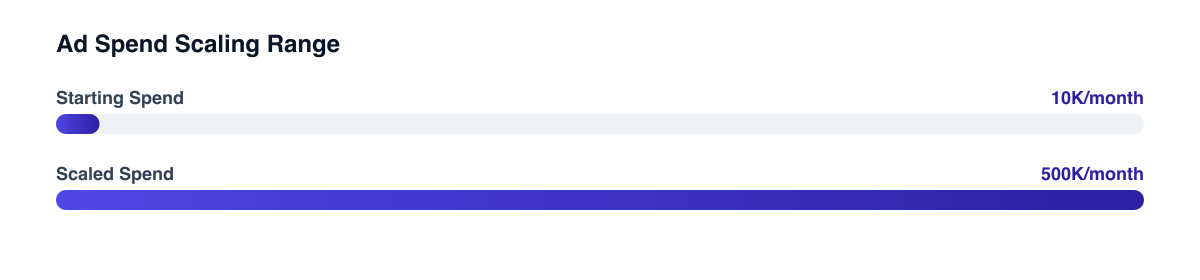
This guide covers everything: how to structure campaigns, what creative actually works, how to fix the tracking gaps that are quietly destroying your data, when to trust Meta's automation, and how to integrate paid social into a full-funnel acquisition engine. This is the framework we use to take D2C brands from $10k/month in ad spend to $500k/month without torching margin.
Why Is Meta Still the Primary Acquisition Channel for Most D2C Brands in 2026?
Every year, someone declares Meta dead. Every year, it remains the most cost-efficient channel for finding new customers at scale for physical product brands. The reason is simple: no other platform combines purchase-intent data, behavioral signals, lookalike modeling, and a billion-plus daily active users into a single auction you can enter for $50/day.
TikTok has closed the gap — and if you're not running it alongside Meta, you're leaving growth on the table. YouTube remains the best channel for high-consideration purchases. But for the majority of D2C brands in the $1M–$50M revenue range, Meta is where the primary budget belongs because the feedback loop between creative testing, audience learning, and purchase conversion is still the tightest in the industry.
The shift in 2025–2026 is that Meta has moved aggressively toward automation. The brands winning now are not the ones with the most sophisticated manual targeting — they're the ones with the best creative pipelines feeding Meta's machine learning. Audience targeting as a competitive advantage is largely dead. Creative is the only remaining lever that compounds.
"Audience targeting as a competitive advantage is largely dead. Creative is the only remaining lever that compounds."
— Dhruvit Shah, Co-Founder — Performance Marketing & Growth Strategy
Campaign Structure: What's the Three-Layer Framework?
The accounts we inherit most often have one of two structural problems: either everything is crammed into a single campaign with no funnel logic, or they've over-segmented into dozens of campaigns that starve Meta's algorithm of the data it needs to optimize.
The three-layer framework fixes both.
Layer 1 — Prospecting. This is your growth engine. Cold audiences, broad targeting, and Advantage+ campaigns (more on those below) all live here. The goal is net-new customer acquisition at a target CPA that keeps your blended CAC healthy. Budget allocation: 60–70% of total spend for a scaling brand, lower for a brand in a defend-and-retain phase.
Layer 2 — Retargeting. Warm audiences who have engaged with your content, visited key pages, or added to cart without purchasing. This layer should be tight — no more than 30-day windows for most categories, 7-day for high-velocity products. Do not let retargeting balloon into 180-day windows; you end up paying to show ads to people who bought six months ago and forgot you exist.
Layer 3 — Retention and LTV. Existing customers segmented by purchase recency, frequency, and average order value. Use this layer to drive repeat purchases, cross-sell, and win-back lapsed buyers. Most D2C brands underinvest here despite the fact that, in our accounts, retargeting existing customers converts at 3–5x the rate of cold prospecting. The underlying economics are the ones Reichheld and Sasser laid out in Zero Defections (HBR, 1990): revenue from a customer you already acquired carries none of the acquisition cost.
The fix If your account has more than 8–10 active ad sets at any layer, you are fragmenting your data. Consolidate, let Meta optimize across a larger audience pool, and watch your CPMs drop within two weeks.
Creative: The #1 Lever — UGC vs Studio, Testing Frameworks, Fighting Fatigue
Creative is where D2C brands win or lose in 2026. With broad targeting and automation doing the audience work, the only thing differentiating your account from a competitor's in the same auction is the quality, volume, and relevance of your creative.
The UGC vs. studio debate has a nuanced answer. UGC — content shot by real customers, creators, or your own team in an authentic style — outperforms polished studio creative in cold prospecting for most consumer categories. The reason is psychological: native-feeling content earns attention before the viewer registers it as an ad. Studio creative, however, dominates in retargeting and for high-price-point products where production quality signals brand legitimacy.
The real answer, covered in depth in the UGC vs studio creative breakdown, is that you need both — and you need a systematic way to know which is working.
That's where your creative testing framework comes in. The approach that scales: test creative at the concept level first (new hook vs. new hook), not the execution level (same concept, different color). Most accounts do the opposite and waste test budgets learning nothing actionable. Each test needs statistical significance before you kill anything — typically $500–$1,000 in spend per creative at a $30–$50 CPM environment.
Creative fatigue is the tax every scaling brand pays. When frequency climbs above 3–4 impressions per person per week in a retargeting audience, CPMs rise, CTR drops, and conversion rate craters. The answer is not to reduce spend — it's to increase creative output so you're rotating fresh assets into rotation before fatigue sets in. For a brand spending $50k/month, you should be producing 8–12 net-new creative concepts per month minimum.
The fix Build a creative brief template that separates hook, body, and CTA as distinct variables. Test hooks in static format first — fastest feedback loop, lowest production cost. Promote winning hooks into video. Promote winning videos into your highest-budget prospecting campaigns.
Tracking: Why Is Your Pixel Broken, and What Does CAPI Fix?
Here is the uncomfortable truth: if you're relying solely on the Meta Pixel for conversion data in 2026, you are flying partially blind. Apple's App Tracking Transparency framework, browser-level tracking prevention, and ad blockers all cut into browser-side event collection. Across the accounts we've audited, pixel-only setups typically underreport conversions by 20–40%, varying with audience demographics and device mix — measure your own gap rather than assuming ours.
When Meta's algorithm can't see the conversions it generated, it can't optimize toward them. Your CPAs look worse than they are, you reduce budget based on false data, and your prospecting campaigns never exit the learning phase — which Meta exits only after roughly 50 optimisation events per ad set in a rolling seven-day window, a threshold that under-reported conversions make much harder to hit.
The Meta Conversions API (CAPI) solves this by sending conversion data directly from your server to Meta — bypassing the browser entirely. Our Meta Conversions API guide walks through the exact implementation, but the summary is: deduplicated server-side events plus pixel events give you the highest possible event match quality score, which directly improves algorithm performance.
In our own implementations, brands that deploy CAPI correctly typically see a 15–25% improvement in reported ROAS within 30 days — not because performance improved, but because the attribution was broken and is now fixed. That's a significant budget reallocation signal. You can sanity-check the quality of your own setup against Meta's Event Match Quality score, which grades how well your server events resolve to real people.
The second tracking issue is attribution window mismatch. Meta defaults to a 7-day click, 1-day view window. For most D2C brands with a 1–3 day consideration cycle, this is fine. For higher-ticket items ($150+), switch to 7-day click only and cross-reference against your Shopify or backend data to triangulate true performance.
Advantage+ Shopping Campaigns: How and When Do You Use Automation?
Meta's Advantage+ Shopping Campaigns (ASC) are the most debated topic in D2C paid social right now. They're also widely misunderstood.
ASC hands Meta near-total control over audience targeting, placement, creative delivery, and budget allocation within the campaign. For brands with strong creative libraries and clean conversion data, ASC frequently outperforms manually structured campaigns in prospecting — because Meta's models have more signal than any manual targeting setup can replicate.
The full breakdown of when to use them, how to structure your budget split between ASC and manual campaigns, and what the data says about ASC performance at different spend levels is in the Advantage+ Shopping Campaigns deep-dive. The short version: test ASC with 20–30% of your prospecting budget before committing further. The winning approach for most mid-scale brands is a hybrid — ASC for broad prospecting, manual campaigns for retargeting and audience-specific messaging.
One critical detail: ASC will serve ads to your existing customers unless you explicitly exclude them. Always upload your customer list as an exclusion or you'll pay cold-audience CPMs to retarget people who already bought.
Dynamic product ads complement ASC well for catalog-heavy brands. When a user has viewed a product but not purchased, dynamic ads automatically serve that specific product — no manual creative needed. At scale, the DPA campaigns we run typically show 40–60% lower CPAs than static prospecting because intent signals are doing the targeting work. This depends entirely on catalog data quality. Meta validates your feed against its product data specifications for catalogs in Commerce Manager, and incomplete titles, missing identifiers, or stale availability flags degrade DPA performance before targeting ever comes into play.
Full-Funnel Paid Social Strategy: Meta + TikTok + YouTube
Meta alone is not a full-funnel strategy. It's the core of one.
The brands compounding fastest in 2026 are running a coordinated three-platform approach where each channel plays to its strength:
| Platform | Primary Role | Funnel Stage | Avg. CAC vs. Meta |
|---|---|---|---|
| Meta | Demand capture + retargeting | Mid–lower funnel | Baseline |
| TikTok | Demand generation + discovery | Top funnel | 10–30% higher CAC, higher LTV |
| YouTube | Consideration + high-intent search | Mid funnel | 20–40% higher CAC |
TikTok excels at generating demand for products people didn't know they needed — which is why it seeds Meta retargeting pools so effectively when run in parallel. The TikTok Ads guide covers how to structure TikTok campaigns specifically for D2C and how to repurpose winning Meta creative for TikTok (hint: it usually needs a faster hook).
YouTube's strength is length and intent. A 60-second pre-roll ad has room to tell a story, handle objections, and build genuine brand preference in a way that a Meta feed ad cannot. For high-price-point D2C products ($100+), YouTube mid-funnel campaigns consistently lower blended CAC by warming audiences before they reach Meta retargeting. The YouTube Ads guide covers exact campaign types and bidding strategies for D2C.
The full architecture — how to sequence spending across platforms, how to attribute revenue when customers touch all three, and how to decide where to allocate incremental budget — is covered in the full-funnel paid social playbook.
One underutilized lever in 2026: influencer marketing ROI and organic social strategy generate the creative raw material that feeds paid social. Brands that treat organic and paid as separate functions leave massive efficiency gains on the table. The highest-performing paid creative is almost always content that proved itself organically first.
The fix Before increasing paid social budget, audit whether your creative pipeline is keeping pace. If you're spending more than $30k/month and producing fewer than 6 new concepts per month, you will hit a performance ceiling that no additional budget can fix. Invest in content before spend.
What Are the 5 Most Common Account-Killing Mistakes?
Across the hundreds of D2C accounts we've audited, the same structural mistakes show up repeatedly — and they're not subtle errors. They're fundamental misconfigurations that compound into significant wasted spend over time.
The five mistakes covered in detail in 5 Meta Ads Mistakes are: running too many small ad sets that fragment data and keep campaigns permanently in learning phase; using interest targeting as a primary strategy in 2026 when broad targeting consistently outperforms it for established brands; letting retargeting audiences grow so large they function as prospecting campaigns with inflated CPAs; not separating prospecting and retargeting budgets so retargeting consistently cannibalizes prospecting spend; and most critically, optimizing for ROAS in a tracking environment where 30–40% of conversions are invisible to Meta.
The last point deserves emphasis. If your pixel is underreporting and your CAPI is not implemented, your optimization signal is corrupted. Every automated bidding decision Meta makes is based on incomplete data. Fix tracking before you adjust creative, targeting, or budget — because every other optimization is built on that foundation.
The fix Run a tracking audit before any new campaign launch: check Event Match Quality scores in Events Manager (anything below 6.0 needs CAPI), verify your Purchase event is firing correctly on Shopify order confirmation, and confirm your attribution window matches your product's consideration cycle. Thirty minutes of tracking hygiene saves weeks of misallocated budget.
The Bottom Line
Meta remains the best acquisition channel for most D2C brands in 2026 — but only if you've rebuilt your approach around creative volume, automation-friendly campaign structure, and clean server-side tracking. The brands struggling are running outdated targeting strategies against a broken pixel and wondering why the numbers don't work. The brands scaling are feeding Meta's algorithm with high-quality conversion data and a constant rotation of fresh creative. Fix your tracking first, build a creative testing system second, layer in TikTok and YouTube third, and avoid the five structural mistakes that quietly drain budget in the background. Everything you need to execute this is in the cluster below.
Everything in this cluster
5 Meta Ads Mistakes That Kill D2C Accounts
Advantage+ Shopping Campaigns: The D2C Guide
Meta Conversions API: Implementation Guide for D2C
The Full-Funnel Paid Social Playbook
UGC vs Studio Creative: What the Data Says
Creative Testing Framework for Meta Ads
TikTok Ads for D2C Brands in 2026
YouTube Ads for D2C Brands in 2026
Measuring Influencer Marketing ROI in 2026
Organic Social Strategy for D2C
Work with us on this
If you want paid social and performance marketing done for your brand, our Performance Marketing service covers Meta, Google, TikTok, and emerging platforms end-to-end — from account audit to creative strategy to daily optimization. For creative production, UGC, and ad testing frameworks, see our Creative & Branding service.
PART OF OUR SERVICE
Performance Marketing
PROOF FROM A CLIENT
4x revenue growth
from $18K to $72K monthly revenue · Food & Beverage
How a Food D2C Brand Grew Revenue 4x in 6 Months→Want a free marketing audit?
We'll review your tracking, ad accounts, and funnel — and show you exactly where the gaps are.
Get Your Free Audit →